United Kingdom · Bank statement
Files never leave your computer
Rule-based parsing
Excel, CSV and QBO
No per-page limits on desktop

The Problem
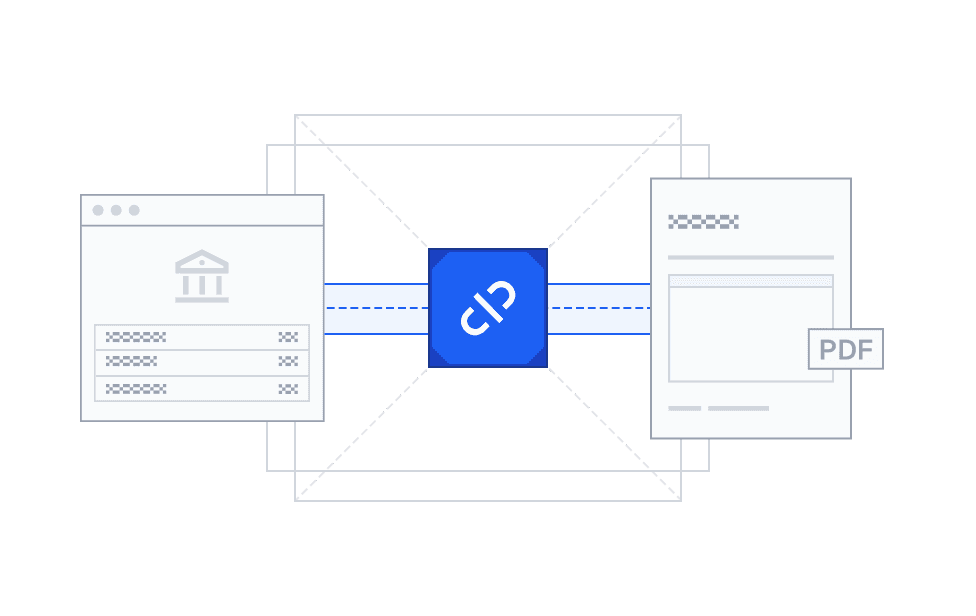
The Feed Breaks, or Misses Things
You're closing a client on Friday and the HSBC feed stops syncing, or it drops a pending charge that posted later at a different amount. The PDF is the actual record. The feed is only an approximation.
Still Typing Transactions by Hand?
A client hands over a year of HSBC PDFs and you start re-keying into a spreadsheet. It takes hours, and one missed digit throws off the whole reconciliation. Most tools that fix this make you upload sensitive client data to someone else's servers. You shouldn't have to choose between speed and where your clients' data ends up.
How it works



HSBC format
From a HSBC PDF to clean Excel, CSV or QBO file
HSBC statements are built to be read by people, not parsed by software, which is exactly why copy-paste falls apart. Docubrew is built around the HSBC layout so the data lands clean.
HSBC-Checking.pdf

This is an example bank statement with no real data.

HSBC-Checking.csv
Date,Payment type and details,£ Paid out,£ Paid in,£ Balance
15 Apr 26,DEP Deposit from Employer ABC Industries,,2950.00,4195.67
16 Apr 26,ZEL Zelle Transfer to Marcus Lee Ref # f9KpL2mN8r3,120.00,,4075.67
17 Apr 26,S/O Shell Oil 574328 Houston TX,48.76,,4026.91
18 Apr 26,KRO Kroger #841 Birmingham AL,67.23,,3959.68
18 Apr 26,STA Starbucks Store 03245 Birmingham AL,6.15,,3953.53
19 Apr 26,TRF Online Transfer from Savings Ref # OT19A2K7,,500.00,4453.53
20 Apr 26,NET Netflix.com 866-579-7172 CA,15.49,,4438.04
20 Apr 26,SPT Spotify USA New York NY,10.99,,4427.05
01
Separate Paid out and Paid in columns
HSBC splits debits and credits across a £ Paid out column and a £ Paid in column rather than one signed amount. Docubrew keeps both as separate numeric columns, under HSBC's own labels.
02
A payment type code sits in front of every description
Every row opens with a short code, and HSBC documents its own set: ATM, BACS, CHQ, CR, DD, DR, SO and TRF. Docubrew reads it as the payment type and gives it a column of its own.
03
The date and the balance are each printed once per day
HSBC prints the date on the first transaction of a day and the balance on the last, leaving both blank in between. Docubrew fills the date forward and leaves the balance exactly where HSBC shows it.
04
Details wrap across lines, and the amount sits on the last one
A transaction can run to three lines, and the amount is printed against the last one, not the first, so a line-by-line parser attaches the money to the wrong row. Docubrew keeps them together.
05
Plenty of the statement is not the statement
Brought and carried forward rows, the repeated account header, the summary box with its own wording, the FSCS panel and pages of terms are not transactions. Docubrew keeps the table, drops the rest.
06
DR means two different things depending on where it sits
At the start of a row DR is a payment type code like BP or CR. After an amount it marks a debit balance. Docubrew reads each for what it is, so a code never turns into a sign or a payee.

HSBC Facts
Date format
Day and short month with a two-digit year. The date is printed once per posting day and left blank on the rest of that day's rows.
Statement retention
HSBC UK keeps up to 6 years of statements in Online Banking and the HSBC UK Mobile Banking app.
Native export
The monthly statement downloads as a PDF. HSBC does offer Excel (xls) and CSV, but only from your transactions list, and midata is a separate current-account file covering the 12 month period ending 30 days ago.
Accounts
Personal checking and savings columns
HSBC Bank Account
Advance Bank Account
Basic Bank Account
Flexible Saver
Online Bonus Saver
Regular Saver
Business accounts
HSBC Business Current Account
HSBC Kinetic Current Account
Business Money Manager Account
Output
What you get: a clean,
structured data in three formats
Docubrew exports an Excel workbook (.xlsx), a CSV, or a QBO file with one row per transaction. Each row carries the fields you actually reconcile against.
Transaction date (normalised to MM/DD/YYYY)
Payment type
Description / payee (reassembled when it wraps)
Paid out and Paid in in separate columns
Balance
Account number & statement period

One clean output, everywhere you need it
Take .xlsx if you want a workbook that opens straight into Excel, formatting intact. Take CSV for Google Sheets, Xero, FreshBooks, and most accounting software that accepts CSV bank transactions. Take QBO for the QuickBooks bank feed. Whichever you pick, it's a clean import, not a live connection, so you stay in control of what goes into the books.
Get your PDF
How to download your HSBC statement as a PDF
Tip: HSBC does have Excel and CSV, but they come from the transactions list, not the statement: pick the account, use Search and filter, then Download. That gives a filtered list rather than the issued document.
Who it's for
Built for the people who live in bank statements
Wherever HSBC PDFs pile up, Docubrew turns them into clean, sortable data.




Trust & Security
Your clients' data stays where it belongs, with you

Local Desktop Processing
With the desktop app, everything runs locally on your device. Your clients' bank data never leaves your network.

Secure Cloud Conversion
Choose the cloud and your files are encrypted on upload and automatically deleted within 24 hours. Nothing is kept after that.

Same Input, Same Output
Docubrew uses rule-based parsing, so the same statement always produces the same result. No AI, no guesswork, and nothing sent to a model for training.
FAQ
Answers to your questions
How do I convert a HSBC statement to Excel, CSV or QBO?
Upload your HSBC PDF statement to Docubrew, let the rule-based parser extract every transaction, and download the result as an Excel workbook, a CSV, or a QBO file for QuickBooks. On the desktop app the entire process runs on your own computer, so your statement is never uploaded anywhere.
Does HSBC let you download statements to Excel, CSV or QBO?
Not the statement itself. HSBC issues it as a PDF and keeps 6 years of them online. The transactions list gives Excel or CSV, but it is built from the date filter you set rather than a statement period, so it will not match the document an accountant or lender asked for.
midata covers only the 12 months ending 30 days ago, on personal current accounts, PC or Mac only. For the formal statement, or anything older, you are working from the PDF, and a converter like Docubrew is the reliable way to get that data into Excel, CSV or QBO.
Does Docubrew handle HSBC's Paid out and Paid in columns and the missing dates and balances?
Yes. HSBC splits debits and credits across a "Paid out" column and a "Paid in" column, prints the date only on the first transaction of each day, and prints the running balance only on that day's closing row. Paste that into a spreadsheet and the two amount columns run together while the dates and balances scatter. Docubrew keeps Paid out and Paid in in their own columns, fills the posting date onto every row, reads the payment type code as a type rather than part of the payee, and leaves the balance exactly where HSBC shows it, so the file lines up with the statement you started from.
How accurate is the conversion?
Docubrew is near-perfect on digital (text-layer) PDF bank statements, the kind you download straight from HSBC. Every conversion ends with a preview step, so you can check the rows before you download. Nothing reaches your books unseen.
Can it convert scanned HSBC statements?
Docubrew currently processes text-layer (native digital) PDF statements, the kind you download straight from HSBC Online Banking. Scanned and image-based PDF support is on the near-term roadmap. If that is blocking your workflow, contact us at support@docubrew.com and we will let you know when it ships.
Do you convert HSBC credit card statements?
Not yet. Docubrew currently handles HSBC deposit-account statements, the current account and savings statements you download from HSBC Online Banking. HSBC credit card statement support is not available yet. If you need it, contact us at support@docubrew.com so we can gauge demand.
Is it safe to convert my bank statement here?
Yes. The desktop app parses your file entirely on your own machine, so nothing is uploaded or stored. The cloud option encrypts every upload and deletes files automatically within 24 hours.
Does it work with Xero and QuickBooks?
Yes. For Xero, Sage, FreeAgent, FreshBooks, and most other accounting software, the CSV imports directly. For QuickBooks you can export a QBO file and upload it straight to the bank feed. If you would rather work in a spreadsheet first, take the Excel workbook. Either way it is a clean import, not a live connection, so you stay in control of what goes into the books.
Can I convert several HSBC statements at once?
Yes. Batch processing lets you upload dozens of statements in a single run and download each result as its own file. It's built for firms reconciling multiple clients each month, so you're not converting one PDF at a time.
How is this different from other bank statement converters?
Docubrew offers both a desktop app for local processing and an encrypted cloud option. Many converters are cloud-only, and others make you choose desktop or cloud up front. If you need control over where each client's data is processed, that per-job flexibility matters.
More Banks
Convert statements from other banks
Docubrew has pre-built support for the largest banks, with a fallback parser for most other formats.